
Saint-Germain-des-Prés, Paris: Secrets Behind the Postcards
 Tomas Kauer - International News Writer and Moderator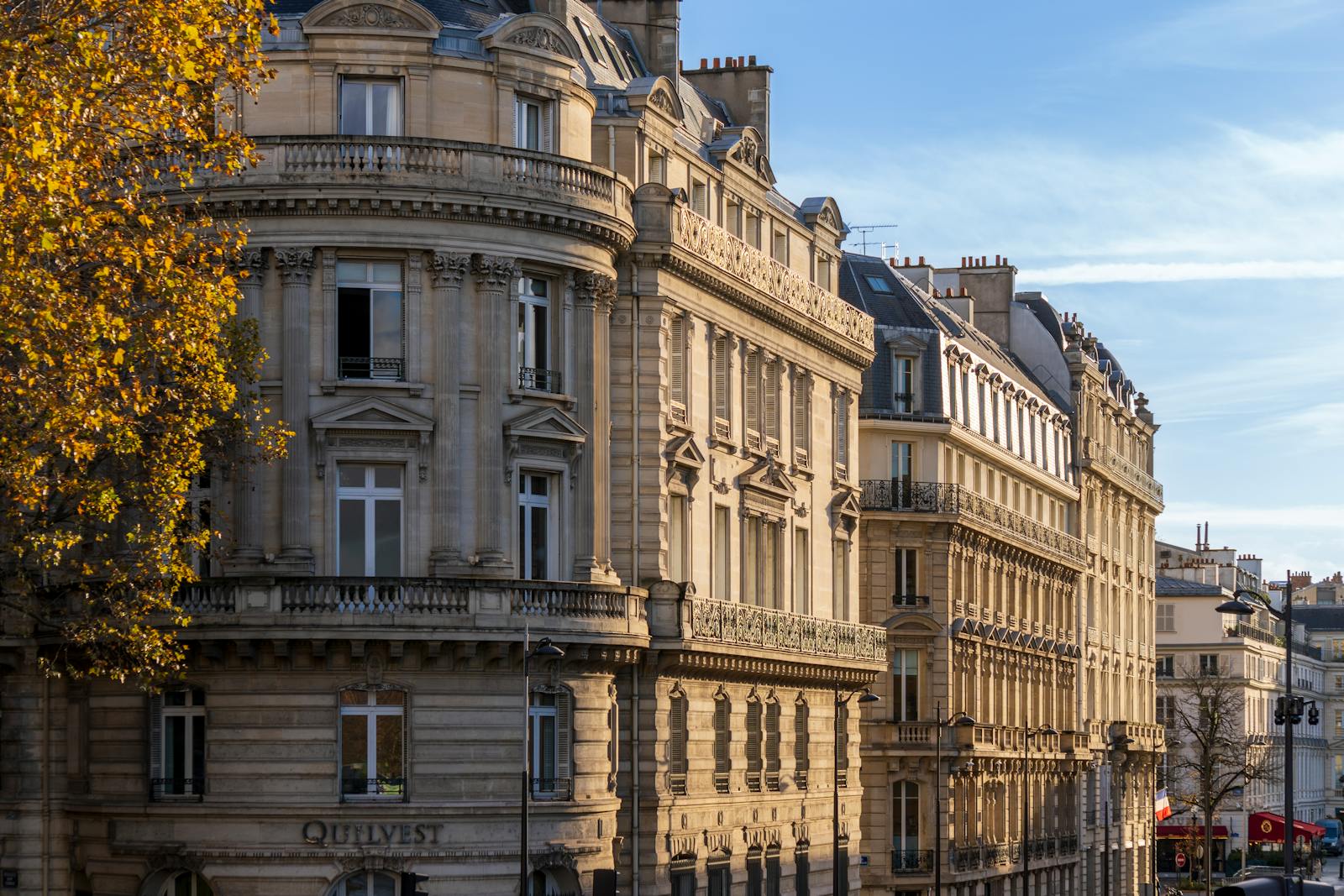
Editors note: Saint-Germain-des-Prés in Paris is often reduced to its famous cafés, but the neighborhood hides far more than its postcard image suggests.
A cracked door opens onto a hidden courtyard where a sleepy bookshop cat gives you side-eye for daring to interrupt its nap, and suddenly you’re swept into the kind of neighborhood where gossip travels faster than the WiFi.
When I first came to Saint-Germain-des-Prés years ago, I was fully prepared for the clichés. A quick espresso at Café de Flore, a crowd of tourists snapping selfies where Sartre once smoked, maybe a hint of jazz floating from Les Deux Magots. The usual postcard Paris with the Eiffel Tower watching over the 6th arrondissement like a grand dame. Two decades later, it still feels like classic Paris—yet it continues to surprise me at every corner. Behind the glossy façades and celebrity cafés, the quartier has a mischievous way of revealing its ever-changing secrets.
I recently had a chance to pry some of these secrets out of a true Parisian, French historian Maud Hacker, who has made a career for the past 20 years of giving visitors a chance to discover hidden gems in this iconic arrondissement. “Saint-Germain-des-Prés… it’s nothing like a simple Parisian postcard. What makes it unique is the way it blends discreet elegance with a true neighborhood life,” says Hacker.
Long associated with writers, artists, and intellectuals, St. Germain has always balanced performance and privacy.
From the very first block on my rediscovery tour of the charming quartier, I realized she was right.
Some of the hidden gems tucked among the narrow streets of Saint-Germain are worth uncovering.
Forgotten Bookshops
My first discovery was a bookshop where the paperbacks seemed to be staging a getaway, spilling onto the pavement in yellowed, lopsided stacks. Inside smelled like dust, cigarettes, and forgotten literary ambitions. A tri-colored cat glared at me from atop a precarious tower of Proust as if to say, “You don’t belong here, darling.”
It was exactly the kind of place Maud had in mind when she said you could “stumble upon bookshops filled with forgotten treasures.” Saint-Germain may have Prada, but it also has shelves that look like they’ve been holding secrets since 1952.
Galleries and Hidden Courtyards
“Galleries revealing emerging artists” seem to be on every block, according to Hacker. From the discreet charm of Galerie Bréheret to the haute-couture furnishings of Galerie Scène Ouverte, the visual seduction is constant as the 6th arrondissement is constantly reinventing itself.
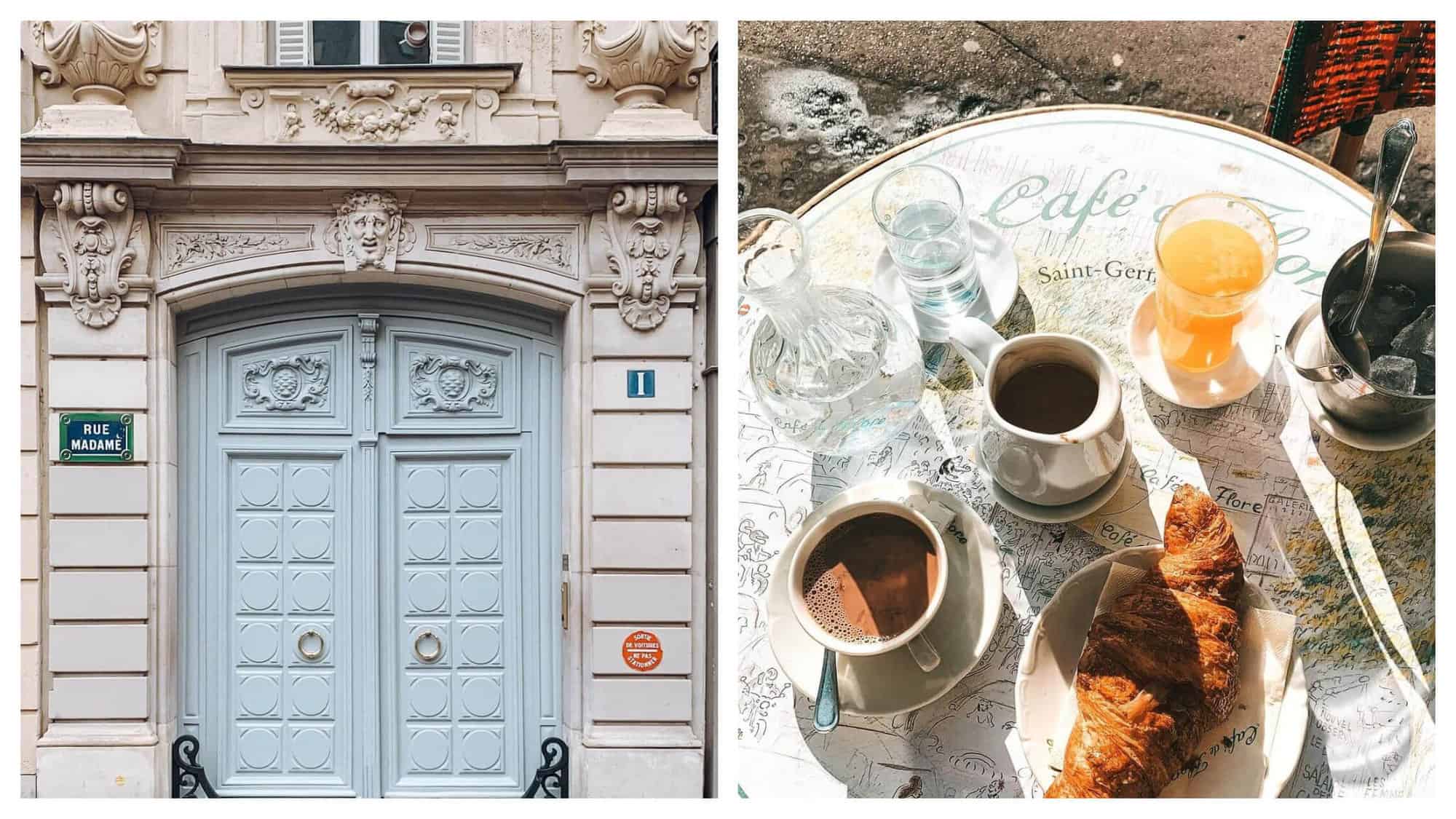
Then there were the doors. Yes, even les portes énormes of Saint-Germain are deceptive. Most refuse to budge, others are so heavy they render your weekly Pilates useless—but catch one ajar and voilà…you’re in another world. Behind the heavy portal, I stumbled into an ivy-draped courtyard where a scooter leaned against a crumbling atelier wall, as if it had retired sometime in the 1960s.
“If Saint-Germain could whisper a secret, it would reveal its hidden ateliers…hands shaping, needles stitching, brushes bringing works to life,” says Hacker. I swear I heard a seamstress humming Piaf from somewhere behind the shutters.
Cafés and Gossip
Halfway through my flânerie, I needed a coffee. Instead of Les Deux Magots, I ducked into a tiny bar where no one spoke English and the only menu was scribbled on a chalkboard that had seen better days. Within 10 minutes, I eavesdropped enough to figure out whose shutters had been painted the wrong shade of green and which neighbor was secretly dating the butcher’s nephew.
Forget Sartre and Beauvoir. These picturesque women with tiny dogs were the true philosophers of Saint-Germain who, after coffee and miniature madeleines, had decided I was a match for the butcher himself. Pourquoi pas.
Talking Walls
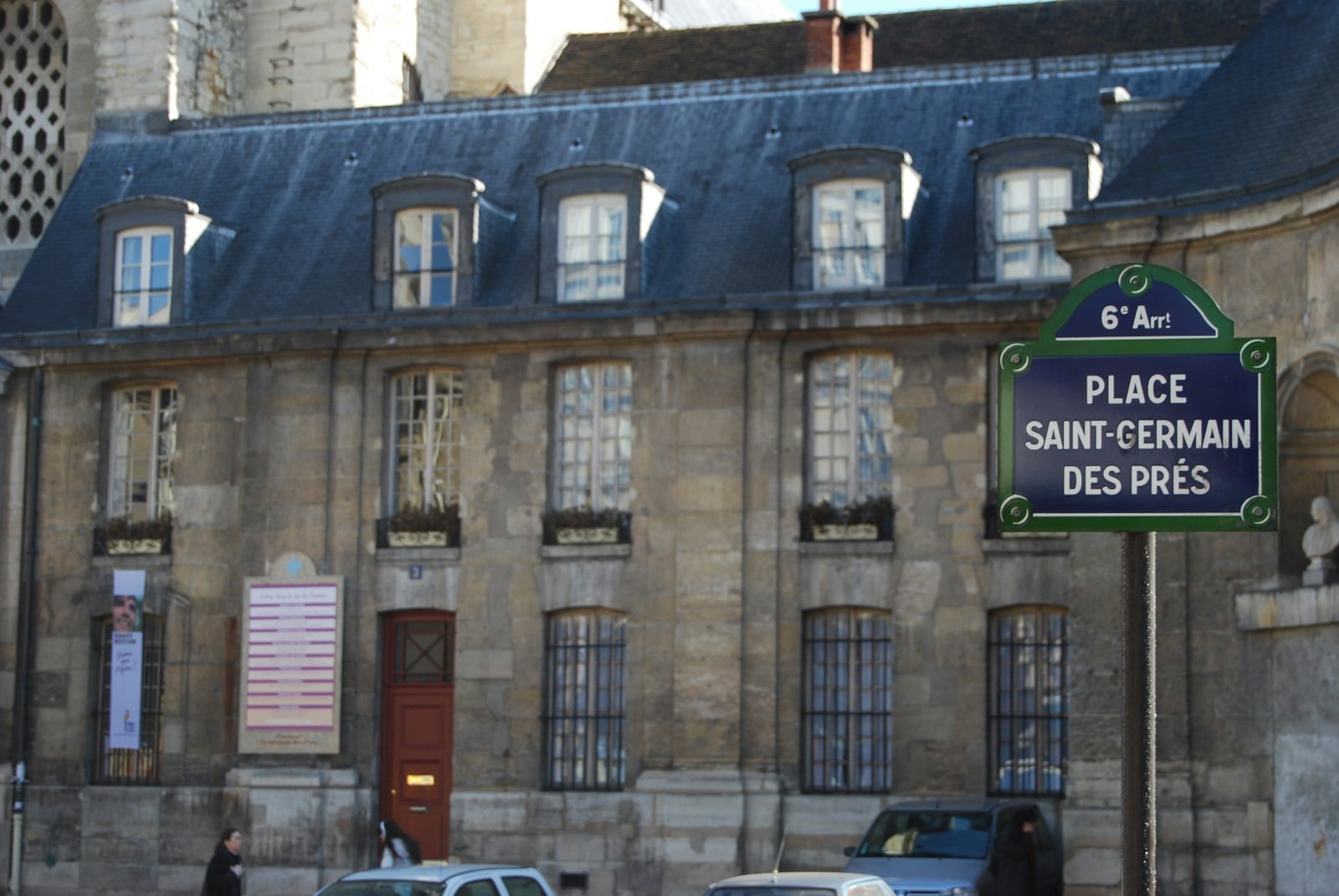
Continuing my promenade that Maud had suggested, I hit Place Furstenberg, where the cobblestones gleamed like they’d been polished for a film set. It was at that moment I started searching for a bohemian poet to leap out from behind the lamppost and invite me to “Come up and see my etchings, mademoiselle?”
“Every architectural detail tells a story,” Hacker tells me. One carved archway seemed to hover over me, heavy with history and fully aware of the centuries of mischief it had witnessed.
St Germain, Paris: Insider Must-Dos
Saint-Germain is best explored slowly, with frequent pauses for caffeine, people-watching, or getting lost behind an unmarked door. Here are some places where the quartier’s spirit still beats strongest:
Café La Palette — Beloved by artists for decades, this terrace still hums with creative chatter, minus the tourist crush.
L’Écume des Pages — A Left Bank institution where the staff recommend novels with missionary zeal. Open late, it’s a dangerously browseable labyrinth.
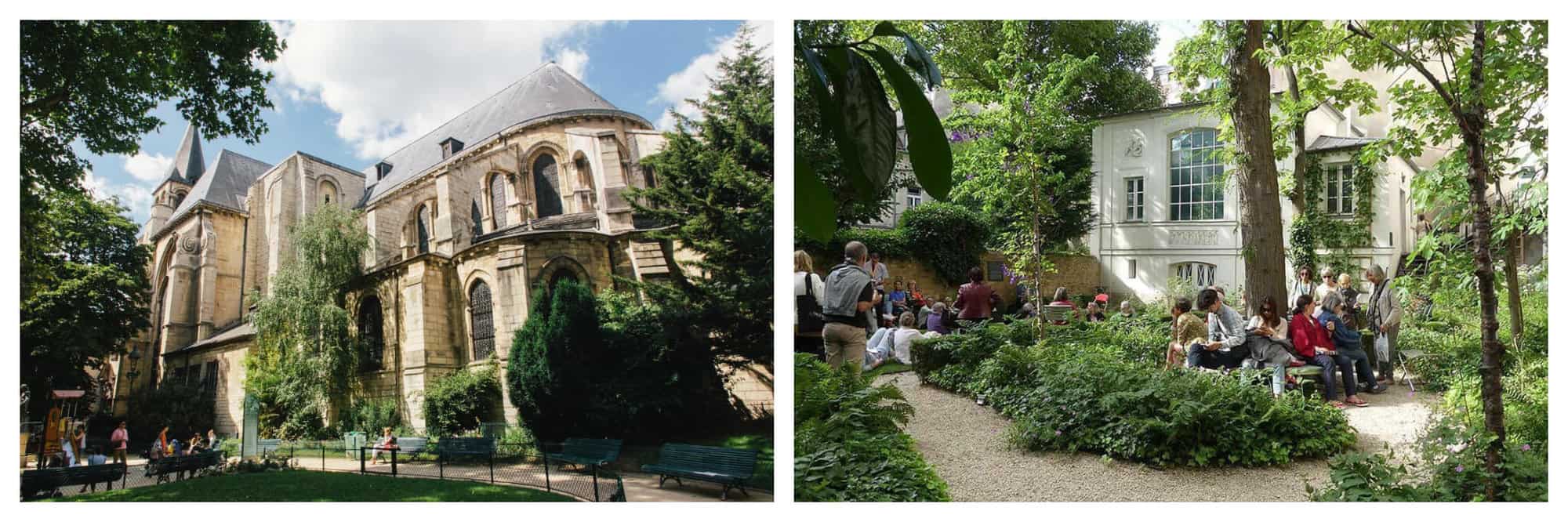
Musée Eugène Delacroix — Hidden in a quiet square, the painter’s former studio and garden feel preserved with quiet stubbornness.
Cravan — A cocktail bar where Saint-Germain’s stylish golden youth gather, proving the quartier hasn’t lost its taste for daring.
Boulangerie Thévenin — A reminder that nothing in Saint-Germain is more democratic—or more sacred—than a good baguette.
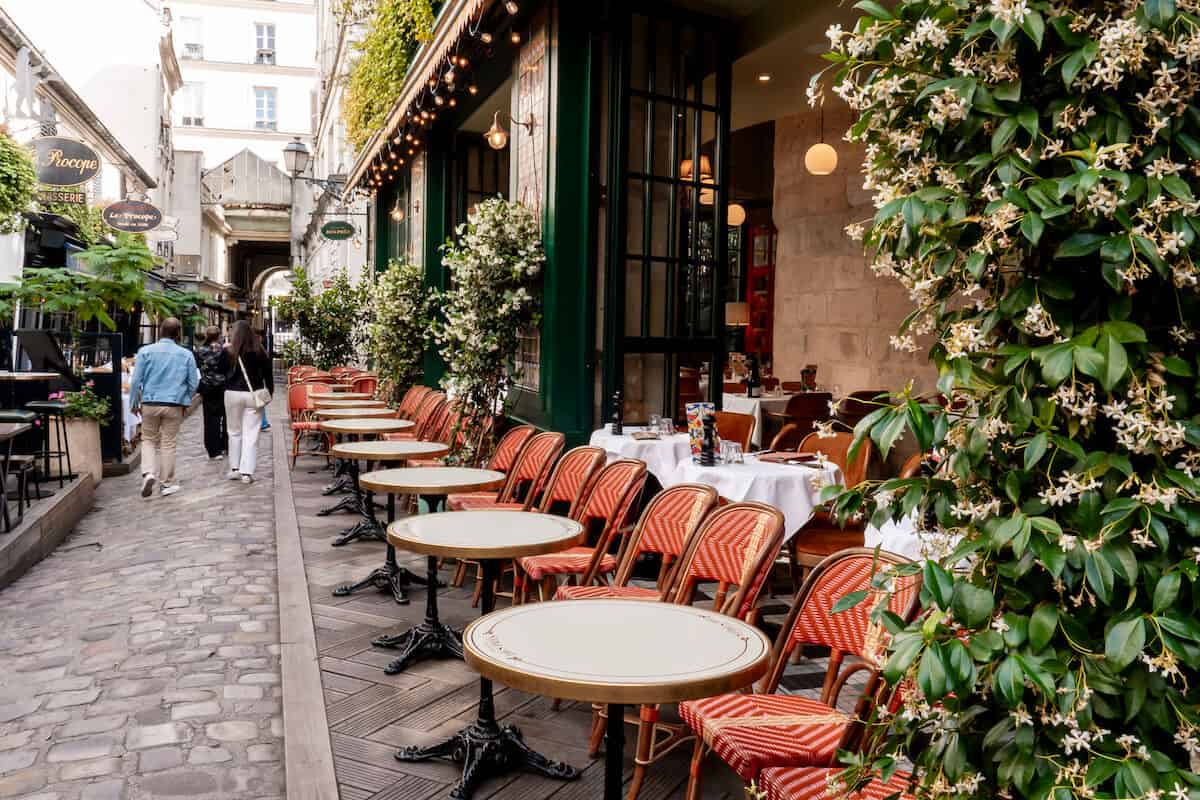
Cour du Commerce Saint-André — This cobbled passageway still feels 18th century, lined with cafés and the same stone walls where Diderot once schemed.
Passage Dauphine — Blink and you’ll miss it, but it’s one of the quartier’s most atmospheric cut-throughs, with art galleries tucked behind courtyards.
Pierre Frey Showroom — A temple of Parisian textile design, where classic French elegance meets bold contemporary flair.
Alix D. Reynis — A boutique workshop where delicate porcelain and jewelry are crafted by hand, proof that Saint-Germain’s artisanal tradition is alive and well.
Hôtel Lutetia Bar — For a glamorous aperitif, this historic Left Bank grande dame mixes jazz-age history with modern polish.
A Saint-Germain Toast
By the time I reached Rue des Beaux-Arts, the quartier had completely undone me. I slipped into the Jacques Garcia-designed bar at L’Hôtel (Oscar Wilde’s last address) and raised a glass to Saint-Germain itself: equal parts myth, mischief, and magic.
At the end of my walk, I realized Saint-Germain isn’t just a neighborhood—it’s a performance. It’s a village disguised as a legend. One moment it dishes out unexpected philosophy with your afternoon espresso, the next it hides you in a courtyard straight out of a novel.
So if you find yourself in this “village” disguised as a legend, order your café crème, look up, and listen. I’m sure the quartier will whisper its secrets to you just as it did to me.
Hacker sums up this misjudged quartier in one word: “Élégance.” Je suis d’accord.
RELATED LINKS
- Own your own piece of Paris with this stunning 3 bedroom fractional St Germain apartment.
- Just around over the river in the Marais, you can enjoy the perfect solo afternoon in Paris.
- St Germain embodies the allure of classic Parisian style.
Written by Kathryn Kinley. Looking to travel? Check out Plum Guide and our Marketplace for fabulous vacation rentals in Paris, France or Italy. Looking to rent long or short term, or buy in France? Ask us! We can connect you to our trusted providers for amazing service and rates or click here. Looking to bring France home to you or to learn online or in person? Check out our marketplace shop and experiences.