
Healthy French Recipes To Keep Winter Habits Going
 Tomas Kauer - International News Writer and Moderator
A few weeks into the new year, resolutions have begun to fade. Healthy eating seems so effortless in warmer months when our bodies naturally crave lighter foods. With winter feeling endless, comfort foods are hard to give up. In France, this moment is treated as a return to balance rather than a failure. Especially in the heart of winter, healthy eating doesn’t mean deprivation. It’s about choosing nourishing, seasonal foods to sustain you through the coldest, darkest weeks of the year. What to eat when the darkest days of winter still have us yearning for “stick to your bones” fare? We’ve rounded up some of the best healthy French recipes for winter.
HOW DO THE FRENCH EAT AFTER THE HOLIDAYS?
They don’t start over – it’s about keeping good habits and equilibrium going when winter is at its most demanding. Joie de vivre and pleasure still rule. In the US, you can witness so many extremes in dining culture: huge portions, or no carbs, no sugar, no fat, etc. While the French are certainly appearance-conscious, deprivation is a foreign concept. Everything in moderation. Small yet filling portions. The focus is very much on what you can eat. Whole, local, seasonal foods. Vegetables and fruits… and more vegetables and fruits!
France is a ritualistic culture. The ritual of going to the marché or eating a beautifully presented meal are pleasures unto themselves. The intentionality surrounding meals (the French do not eat on the go) also lends itself to slower eating. Even exercise is not the punishing pavement pounding found in some cultures. Rather, it is incorporated into everyday life. Sport and physical activity are partaken in as a pleasurable activity rather than an end unto itself.
HEALTHY FRENCH WINTER RECIPES
When motivation is low and winter cooking needs to be comforting, nourishing and easy, these are the kinds of dishes the French turn to — hearty enough for cold weather, but balanced and restrained.
So, back to the main question: what to eat? We’ve rounded up some hearty but healthy French recipes for winter from around the web. Take the austerity out of your January diet and inject pleasure back into eating, the French way.
David Lebovitz’s French Lentil Salad
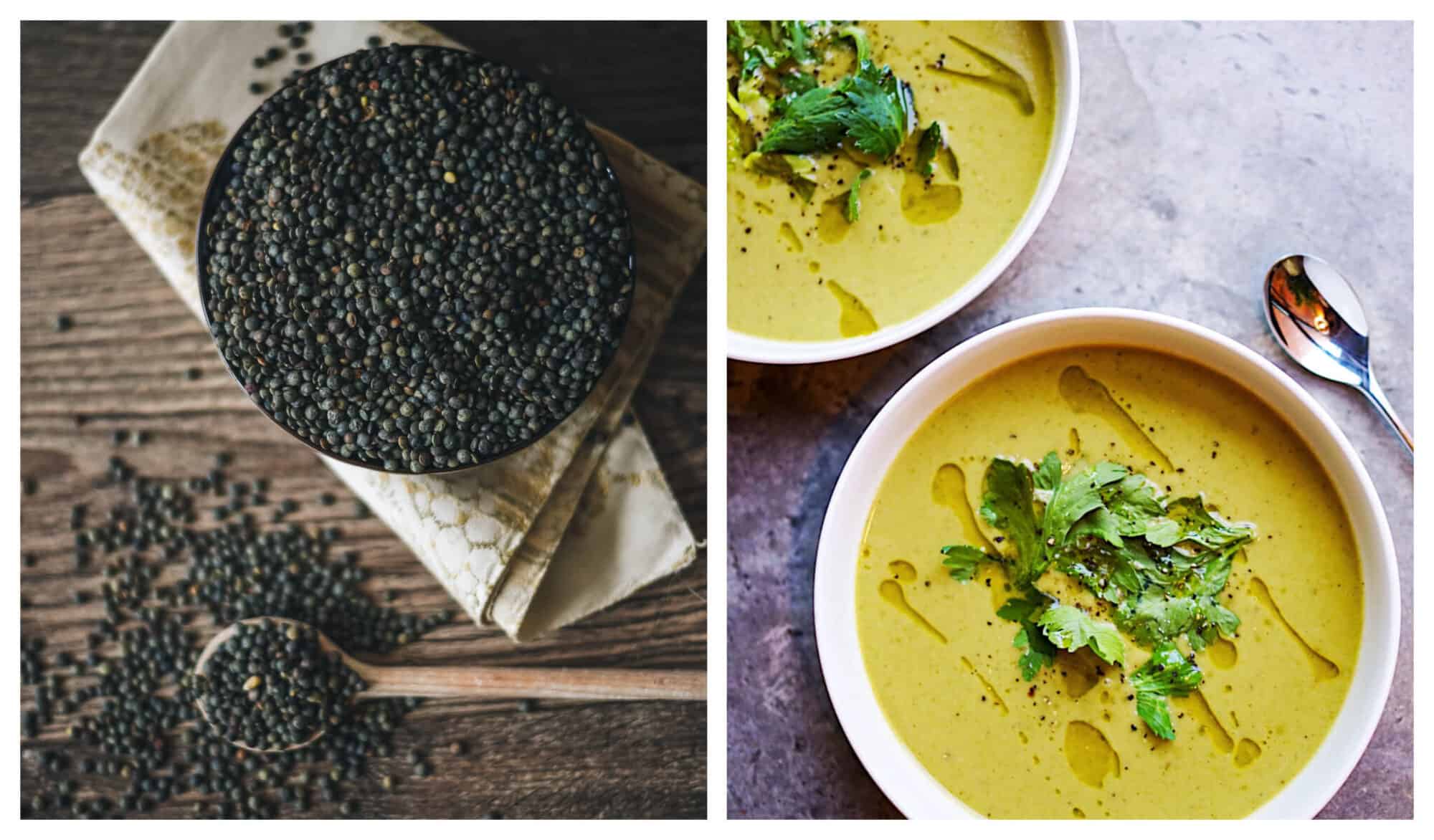
This lentil salad is simplicity at its best: lentils, veggies, aromatics and a homemade vinaigrette. And not just any lentils, but Puy lentils, grown in Le Puy, in Auvergne and protected under the AOC designation (Appellation d’Origine Contrôlée).
Delicious served warm or at room temperature, this salad can also be kept for a few days in the fridge and eaten cold — very much in the spirit of practical French home cooking. Keep it vegetarian and serve it as is, or with the protein of your choice. Toss in bacon, or goat’s cheese for something more indulgent. A hearty French classic that is a canvas for endless variations.
Clotilde Dusoulier’s Clean-Out-the-Fridge Soup
One staple of French home cooking is soup. And not the indulgent soups we so often equate with restaurant cooking, like soupe à l’oignon or a buttery, cream-laden velouté. But rather robust, rustic soups full of fiber, vitamins and minerals, thanks to the rainbow of vegetables thrown in.
Clotilde Dusoulier’s Clean-Out-the-Fridge-Soup is a brilliant way to use your soft carrots, wilted greens, leftover holiday veggies — you name it. As Dusoulier claims, “Soup is an extraordinary catch-all for vegetable odds and ends, and it is the easiest and most rewarding way to transform scraps no one really wants to deal with into something warm and inviting.”
Add starches if you wish to smooth the texture out, or keep your soup low carb. You can also add pulses, frozen vegetables, nut butters, or plant-based milks, and of course, stock and aromatics. Almost anything goes. Blend and voilà!
Umami’s Leek and French Lentil Gratin with Feta
For a lighter but still satisfying winter meal, French people often make vegetable gratins with seasonal produce. This lentil and leek gratin fits the bill — comforting but light, full of fiber and protein, and nutrient rich for keeping healthy through the heart of winter.
Leeks, are a winter staple in French cooking. They bring sweetness and depth, while lentils keep you full. Feta ties it together.
Ludo Lefebvre’s Pot-au-feu
Translating into “pot on the fire,” this budget-friendly beef stew with vegetables such as potatoes, leeks, carrots, celery, turnips, and onion is what Raymond Blanc describes as “the quintessence of French family cuisine… it honours the tables of the rich and poor alike.”
Chef Ludo Lefebvre makes the point more succinctly: “In France, pot-au-feu is our chicken soup.” Lefebvre recreates the beloved dish in this classic pot-au-feu recipe.. If you want to see his subtle multi-cultural twist, check out the video below.
Saveur’s Daube de Bœuf
What is a daube? It’s a stew from Provence made with affordable cuts of beef braised in wine. In that way it has much in common with boeuf bourguignon but is flavored with Mediterranean ingredients and cooked for longer, often using cheaper cuts of meat.
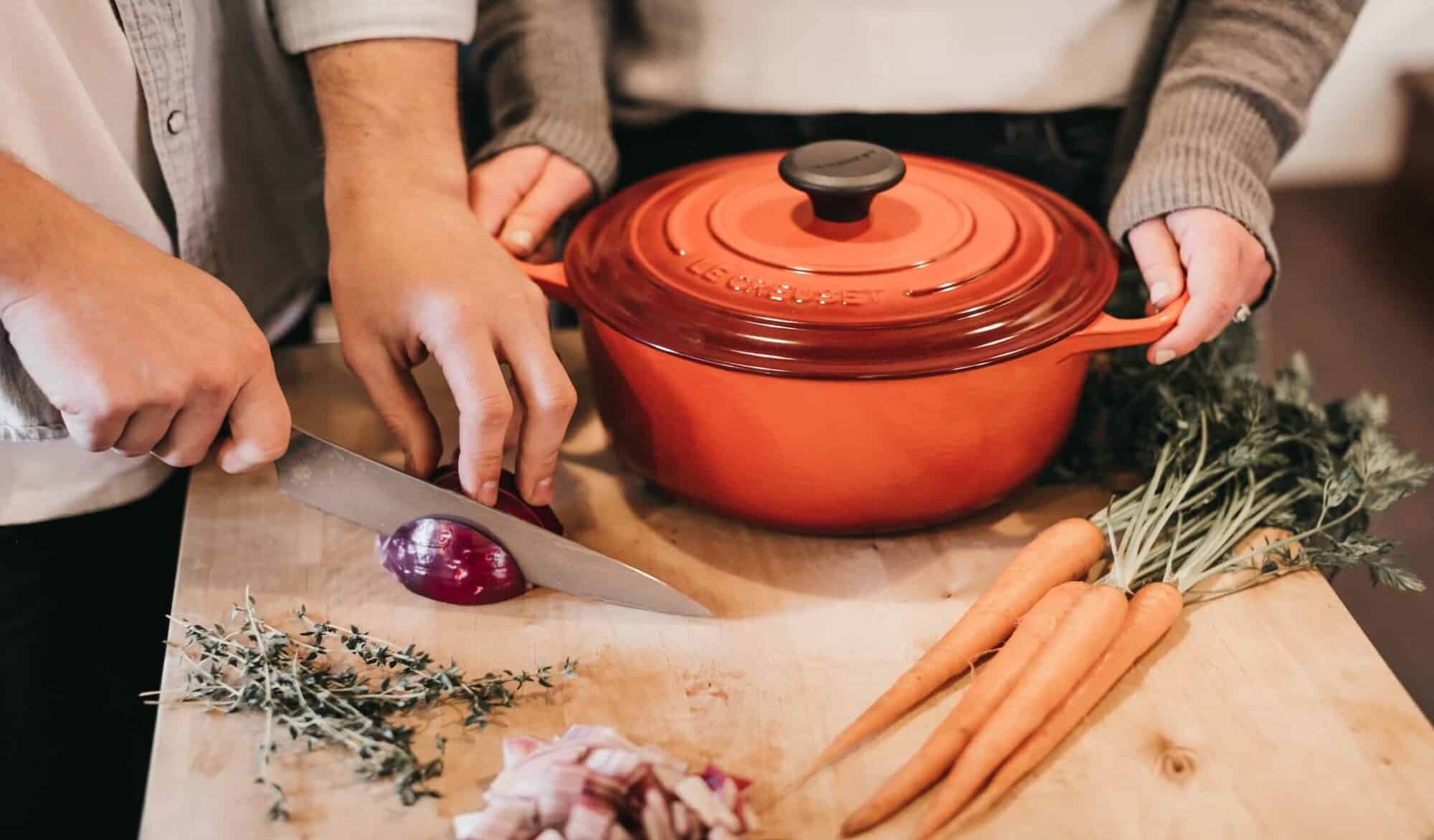
This dish was traditionally cooked in a daubière, a terracotta pot in the shape of a pitcher. A heavy cast-iron pot like Le Creuset will work perfectly. This daube recipe from Saveur includes quintessential Provençal ingredients like extra-virgin olive oil, onions, carrots, garlic, tomatoes, celery, and red wine.
Christi Bishop’s Lightened Coq au Vin
For those who prefer chicken to beef, coq au vin is the perfect hearty recipe for winter. This lightened up coq au vin eschews bacon and uses skinless chicken. Loads of vegetables and a coating of whole-wheat flour on the chicken help make the dish healthier, but it is no less satisfying — ideal for cold nights when you want comfort without excess.
Raymond Blanc’s Celeriac Purée
What to serve with a hearty stew like a daube? Potatoes or rice are common, but a lighter alternative is celeriac mash. Celeriac (or celery root) is used more frequently in French cooking than in many other places, most famously in céleri rémoulade.
Raymond Blanc’s celeriac purée is home cooking at its best. The recipe calls for just celeriac, a small amount of butter, milk, salt, cayenne, and lemon juice — proof that lighter doesn’t have to mean less flavorful.
Poached Pears from La Cuisine d’Annie
At home, French people often eat a little something sweet after dinner. However, it’s more likely to be yoghurt or fromage blanc and/or fruit than an indulgent pastry.
For a light dessert that still feels like a special treat, these poached pears from La Cuisine d’Annie do the trick. They’re perfect for cheering up a dreary January weeknight or finishing a winter dinner on an elegant note.
Frequently Asked Questions
French food tends to use alot of animal products ans is high saturated fat. However portions are quite small and the diet is full of fruts and vegetables too.
No. In 1960, the average French person drank 116 litres of wine per person, per year. In 2000 that number was 28 litres, shrinking to just 17 litres. Now, only approximately 10% of French people drink wine each day. In 1980, it was around 50%.
Yoghurt is a staple of Mediterranean and French diets. It is one of the go-to’s for French people wanting to lose weight. It is high in calcium and has a necessary combination of carbs, protein and fat. Most French women eat a couple of yoghurts a day, often in the morning or after over-indulging as a means of balancing calories
This post is not sponsored, but it may contain affiliate links. If you purchase through our links, we may earn a small commission at no extra cost to you. Your support allows us to keep bringing you content, free of charge. Merci!
Related Links
- In the City of Light this month and wondering what to do? Here is what to do in Paris in January.
- Read about French food habits picked up from living in Paris.
- Looking to stay healthy in the new year? Check out the best salads in Paris.
- Here’s a guide on navigating the Parisian Markets
Written by HiP Paris. Looking to travel? Check out Plum Guide and our Marketplace for fabulous vacation rentals in Paris, France or Italy. Looking to rent long or short term, or buy in France? Ask us! We can connect you to our trusted providers for amazing service and rates or click here. Looking to bring France home to you or to learn online or in person? Check out our marketplace shop and experiences.